

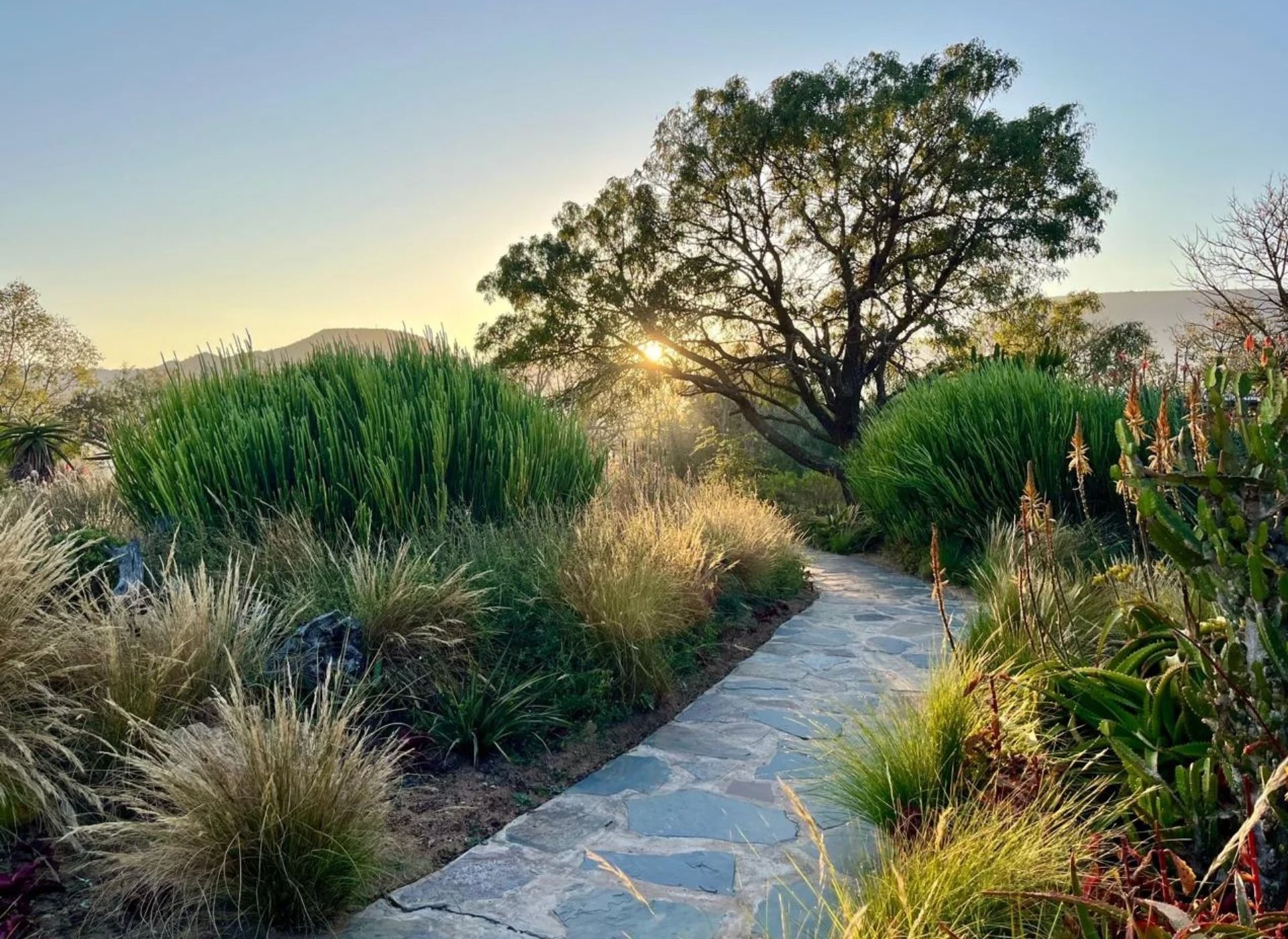
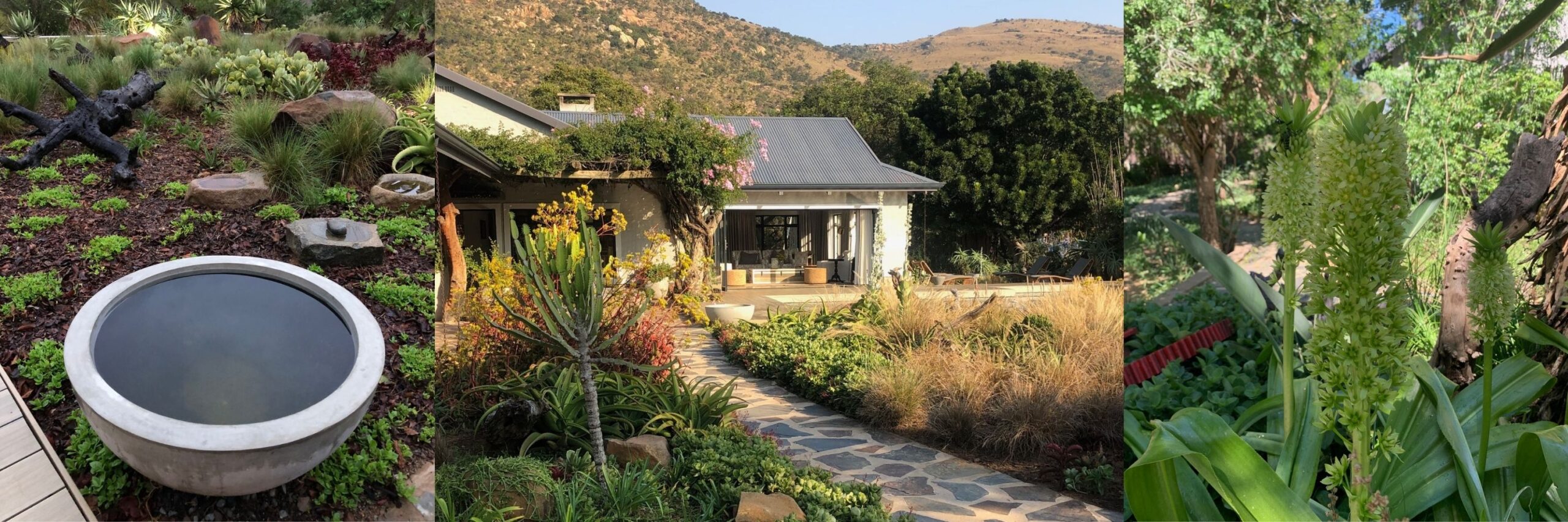
The gardens at Babanango Valley Lodge are an indigenous, water-wise landscape designed by renowned horticulturist Chris Dalzell of Chris Dalzell Landscapes. They sit within the almost 21,000-hectare Babanango Game Reserve in northern KwaZulu-Natal. Planting began in 2019 on ground left bare after the lodge construction concluded. The garden includes many plants that grow naturally on the reserve: towering Mountain Aloes, the rare Aloe gerstneri, a central Tree Wisteria, indigenous grasses, flowering bulbs and succulents. They were chosen to attract birds and butterflies, bring colour through every season, and frame the sweeping valley views rather than block them.
In this article, we explore how Dalzell turned a post-construction dust bowl into a garden that truly belongs to its landscape. We cover the plants that define it, the water-wise principles behind its design, and how it has grown to connect the lodge’s pool, boma, spa and African medicinal garden. We also explain how you can discover Babanango’s botanical diversity with Dalzell himself on his guided botanical tours in 2027.
At Babanango Valley Lodge, Dalzell has demonstrated how thoughtful indigenous garden design in South Africa can complement a conservation landscape – while creating a really unique lodge experience.
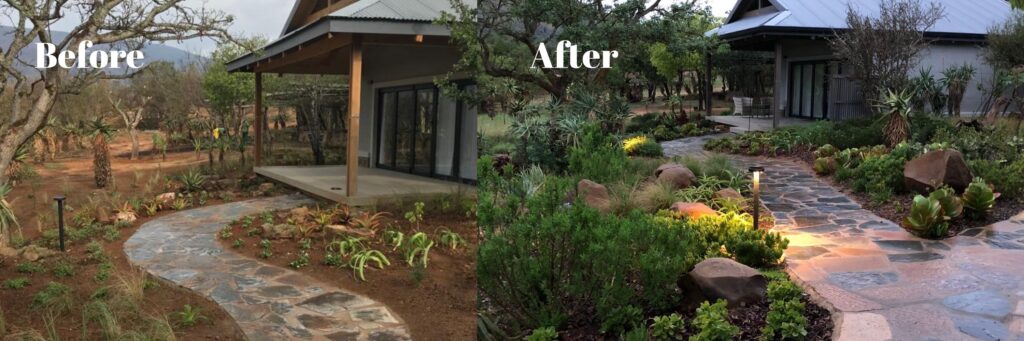
From a Dust Bowl to an Indigenous Garden
When Chris Dalzell first visited Babanango in January 2019, he was struck by the diversity of its plant life. The reserve is home to a variety of habitats – grasslands, thornveld, forests, and succulent-rich areas – each supporting different indigenous species.
His brief was to create gardens that complemented the natural vegetation rather than competing with it. The founders envisaged water-wise planting, flowers throughout the year, and plants that would attract birds and butterflies – while ensuring their guests could still enjoy the sweeping views of the surrounding landscape.
Dalzell considered the opportunity particularly appealing, believing gardens are too often overlooked in game lodge landscaping. Through his work, he was able to bring a completely different dimension to a visitor’s experience of the bush.
Laying the groundwork, Dalzell returned to Babanango at different times of the year to observe which plants flowered when and identify species suitable for the new gardens. Flowering trees, aloes, terrestrial orchids, bulbs, succulents, and grasses were selected alongside weathered driftwood and large rocks.
Plants that Define the Babanango Valley Lodge Gardens
He wanted to create a landscape that felt natural to its setting, which meant incorporating plants already adapted to the local environment.
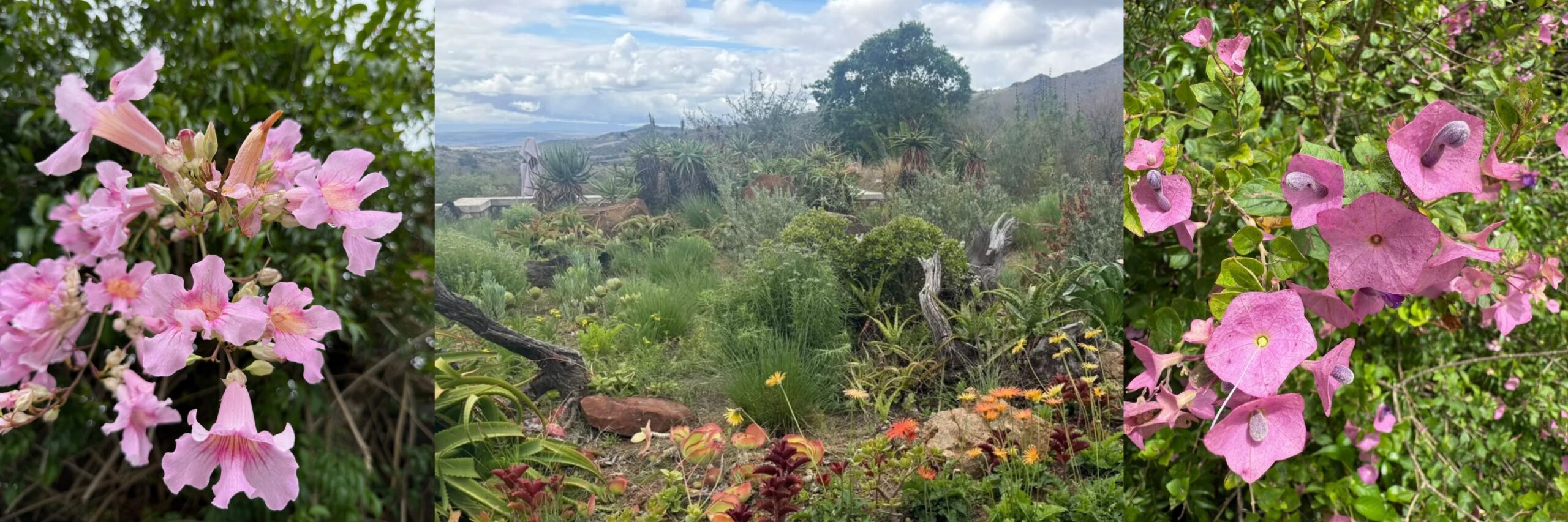
- Trees: One of the most striking features of the gardens is the large Tree Wisteria (Bolusanthus speciosus) at the centre. Flowering in October, this indigenous tree became a focal point of the layout, with pathways designed to take you beneath or around its branches as you head to the accommodation.
- Aloes: The garden’s structure is built around large Mountain Aloes (Aloe marlothii), which grow naturally across the reserve. Their sculptural forms introduce height and texture without obstructing views from the guest suites or pool area. Other aloe species add seasonal interest, including Aloe arborescens, Aloe vanbalenii, Aloe suprafoliata and Aloe greenii. The gardens also showcase the rare Aloe gerstneri, a species found in two large populations on the reserve.
- Bulbs and succulents: Dalzell introduced bulbs such as Hypoxis, Watsonia, Gladiolus and Drimia for seasonal colour, while succulents such as Spekboom (Portulacaria afra) provide resilient ground-level planting.
- Grasses: Indigenous grasses echo the surrounding grasslands and move beautifully in the breeze. Once a year, after the dry winter, the grasses are cut back to encourage fresh growth following the first rains.
- Other plants: Wild Dagga (Leonotis leonurus), Cat’s Whiskers (Ocimum obovatum), and various groundcovers extend the garden’s seasonal appeal.
All these plant species were chosen to create an aloe garden and indigenous landscape that feels connected to the wider reserve, rather than an ornamental garden that has simply been transplanted into the bush. With Babanango Valley Lodge the only fenced lodge on the reserve, larger animals are also prevented from snacking on the plants found here!
Designing a Water-Wise Garden for Birds and Butterflies
Babanango’s inland location brings uniquely contrasting seasonal conditions. During summer, you can expect it to be hot and wet as the afternoon thunderstorms arrive. In winter, the temperature drops and it’s much drier. Selecting plants to cope with these extremes was central, but Dalzell says a water-wise garden in KwaZulu-Natal needs more than drought-tolerant plants.
- Indigenous plants: By prioritising plants that already thrive in the reserve, Dalzell created gardens suited to their environment. Indigenous grasses, aloes and succulents provide resilience while supporting a landscape that reflects the region’s natural character.
- Mulching: This is another essential part of his water-wise approach. The flower beds are mulched to suppress weeds, reduce moisture loss, and return nutrients to the soil. This helps keep maintenance requirements low while supporting healthy plant growth.
The gardens have also been practically designed to support the local ecosystem while creating a beautiful impression. Flowering plants provide nectar for butterflies and sunbirds, while the variety of textures, colours, and growth forms creates interest throughout the year.
The changing seasons also mean that repeat visitors can experience the gardens differently throughout the year. October brings the flowering Tree Wisteria, while other plants take their turn to bloom as the seasons change. This makes the Babanango Valley Lodge gardens so distinctive: they offer a close-up view of the reserve’s botanical diversity alongside the better-known experience of Big 5 game viewing.
An Extension of the Lodge Experience
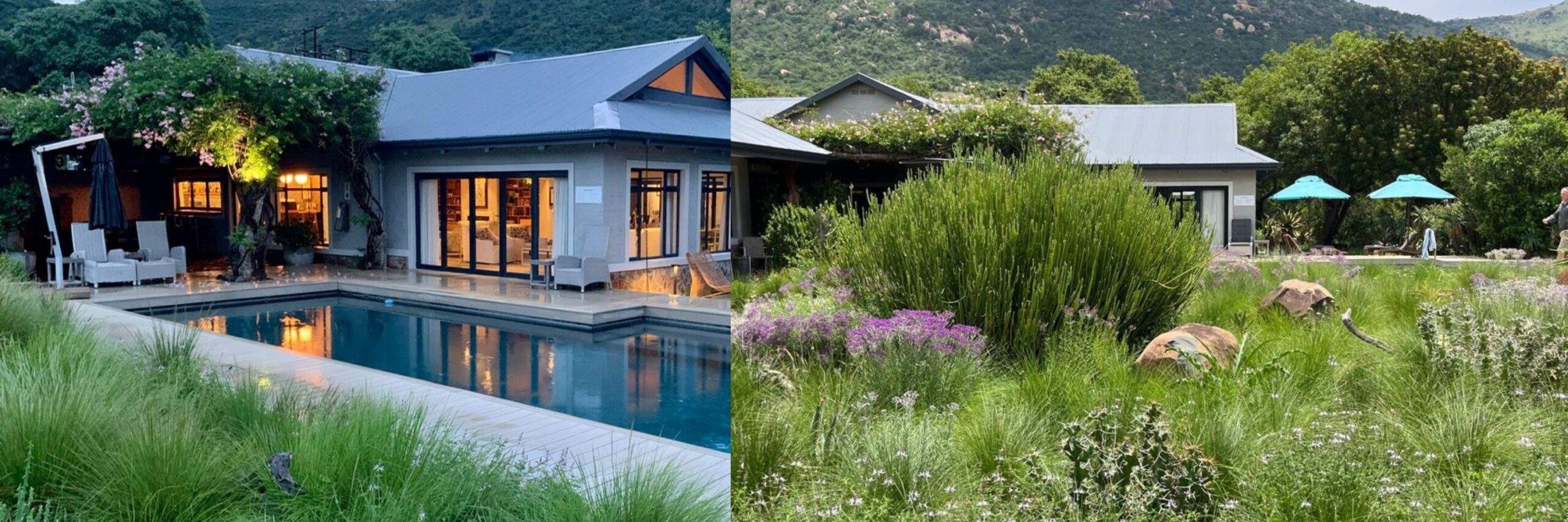
Since the first phase was completed in November 2019, the gardens have expanded beyond the original pool and various accommodation options at Babanango Valley Lodge.
Additional planting now connects the pool area with the boma and conference venue, as well as the gym, spa and yoga deck – extending all the way to Hilltop House. An African medicinal garden introduces guests to plants associated with traditional uses, while seating areas provide quiet corners for relaxation. A play area also gives younger guests space to enjoy the outdoors.
The garden’s development truly reflects the wider restoration vision behind Babanango Game Reserve: protecting the land, restoring natural habitats, and creating an environment where people can appreciate the ecological value.
Discover the Gardens at Babanango Valley Lodge
The Babanango Valley Lodge gardens show the impact of landscaping rooted in a real understanding of the natural environment. By working with indigenous plants, embracing seasonal change, and keeping the design in harmony with the landscape, Dalzell has created a garden that adds depth to the experience of staying in this game reserve.
Whether you’re a keen gardener, a plant enthusiast, or simply someone who enjoys spending time outdoors, the gardens offer another reason to slow down and explore Babanango beyond the game drives.
Get in touch with our team to find out more.
Explore Babanango’s Botanical Diversity with Chris Dalzell in 2027
Acclaimed horticulturist and landscaper Chris Dalzell has also announced an exciting new addition for 2027 – a guided botanical experience at Babanango Game Reserve! You can discover the reserve’s remarkable indigenous flora directly from the expert, learn more about its diverse habitat, and enjoy the landscapes and wildlife on a small-group escape based at Valley Lodge.
Babanango Botanical Tours details
- Dates: Thursday, 28 January to Sunday, 31 January 2027 | Thursday, 4 March to Sunday, 7 March 2027
- Location: Babanango Game Reserve, KwaZulu-Natal
- Accommodation: Babanango Valley Lodge
- Cost: R3,250 per person per night sharing; a 50% single supplement applies
- Included: Accommodation, all meals, drinking water, basic teas and coffees, two game drives per day, and lectures and informative discussions with Chris Dalzell
- Excluded: Reserve levy of R200 per person per day, drinks not specified in the package, and transport to and from Babanango Game Reserve
- Bookings: Christopher Dalzell on 084 553 9832 or email cgmdalzell@gmail.com
FAQs About the Babanango Valley Lodge Gardens
Who designed the Babanango Valley Lodge gardens?
The gardens were designed by Christopher Dalzell of Chris Dalzell Landscapes. Work began in 2019, with the aim of complementing the reserve’s indigenous vegetation, conserving water and attracting birds and butterflies.
What plants can you see in the Babanango Valley Lodge gardens?
The gardens feature Mountain Aloes, the rare Aloe gerstneri, other indigenous aloe species, Tree Wisteria, indigenous grasses, flowering bulbs, succulents and groundcovers. Many of these plants occur naturally on Babanango Game Reserve.
Are the Babanango Valley Lodge gardens water-wise?
Yes. The garden design prioritises indigenous plants suited to the reserve’s hot summers and cold, dry winters. Mulched flower beds help reduce moisture loss, suppress weeds and limit maintenance requirements.